What Is the Zero Gravity Sleep Position?
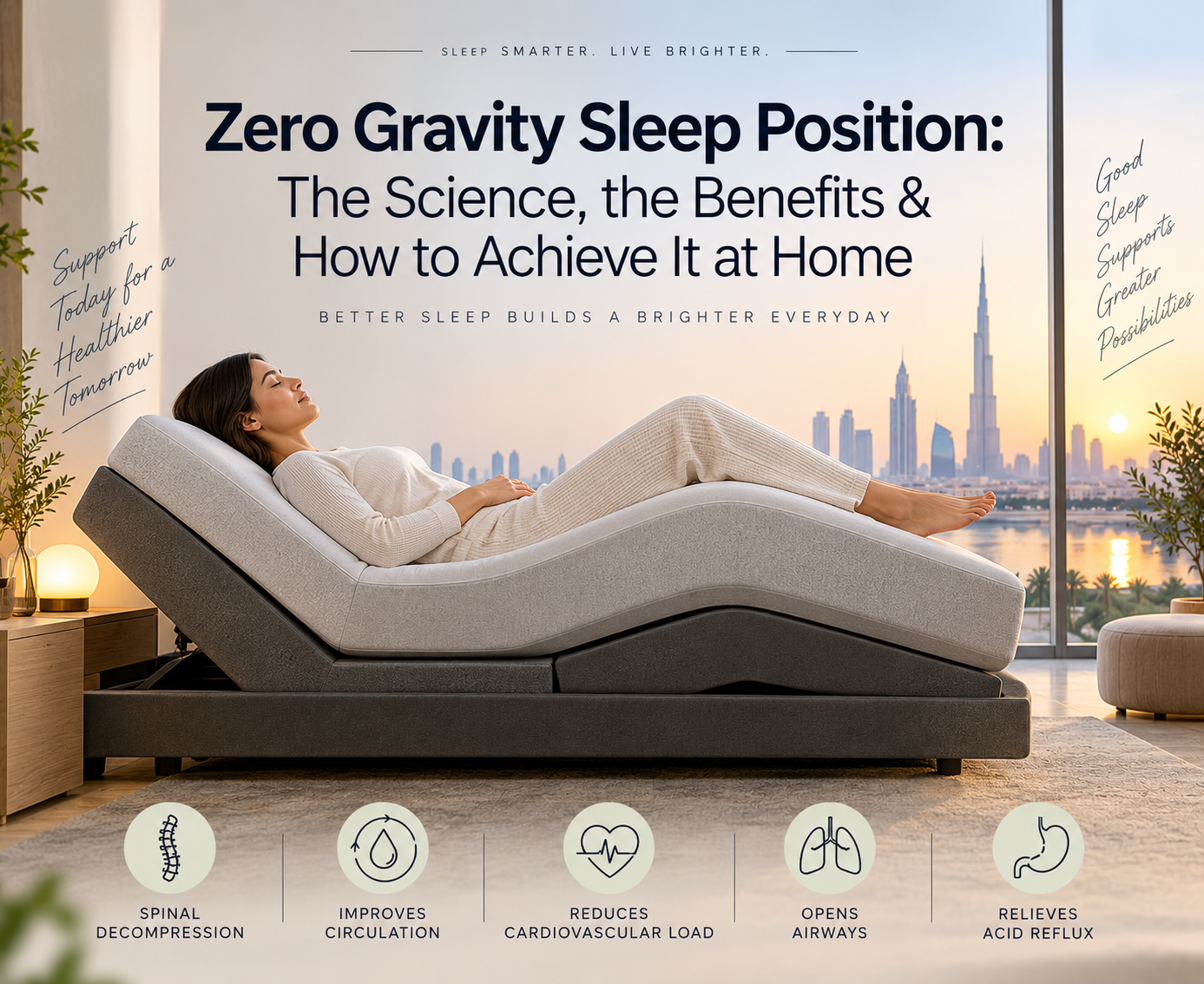
The zero-gravity sleep position is a reclined posture where the head is elevated approximately 30–45 degrees and the knees are raised slightly above heart level, creating a gentle W shaped curve in the body that distributes weight evenly across the sleep surface. It's derived directly from NASA's neutral body posture research, which found that this configuration places the least amount of strain on the spine, joints, and cardiovascular system of any resting position.
Picture your body forming a soft, elongated "W” your torso reclined back, hips settled into the lowest point of the curve, and your knees lifted just above where your heart sits. Instead of your full body weight pressing straight down into the mattress (as it does when lying flat), that weight gets spread across a wider surface area, and gravity's pull on your spine is significantly reduced. (A side-view diagram here really helps visualize the exact angle — worth adding for readers who want to picture it precisely.)
The Science Behind Why It Works
Spinal Decompression
When you lie completely flat on your back, your lumbar spine — the lower curve of your back — often has a gap between it and the mattress, meaning that section of your spine isn't fully supported and stays under mild tension all night. Elevating your legs slightly closes that gap. Your pelvis tilts into a more neutral position, and the muscles surrounding your lower spine can finally relax instead of quietly working to hold your natural curve in place. This aligns with general orthopedic positioning consensus used in physiotherapy and postural care.
Improved Circulation
Raising your legs above heart level assists venous return — essentially, it helps blood travel back up toward your heart rather than pooling in your lower legs and feet. This is particularly relevant if you're on your feet most of the day, or sit for long stretches at a desk, both of which are common realities across UAE workplaces, from retail and hospitality staff to office professionals. Less pooling means less swelling, and often, less of that heavy, tired feeling in your legs by the end of the day.
Reduced Cardiovascular Load
When your legs sit closer to heart level, your heart doesn't have to work as hard to pump blood up from your lower body against gravity. This is the same underlying principal hospitals use when positioning patients after surgery-reducing cardiovascular strain while the body rests and recovers. At home, it simply translates to a slightly easier workload for your heart throughout the night.
Airway Opening
Elevating your head to that 30–45 degree range changes the angle of your throat and airway, making it harder for soft tissue to collapse inward the way it can when lying completely flat. This is the foundational reasoning behind medical recommendations for snoring and mild sleep apnea — gravity works with you instead of against you when your head isn't level with your chest.
Acid Reflux Relief
Keeping your head elevated above your stomach uses simple gravity to help keep stomach acid where it belongs. This is consistent with standard gastroenterology guidance for anyone dealing with nighttime reflux or GERD when you lie flat, there's nothing stopping acid from creeping back up the esophagus, but an elevated upper body changes that equation entirely.
Benefits of Zero Gravity Sleep — Direct Answers
Is Zero Gravity Sleep Good for Back Pain?
Yes — the zero gravity position reduces pressure on the lumbar spine by supporting its natural curve and distributing body weight more evenly. Instead of your lower back bearing concentrated pressure against a flat surface, the reclined, leg elevated angle allows your spinal muscles to relax rather than compensate. It won't fix a structural issue like a herniated disc, but for everyday mechanical back discomfort, the postural relief is genuinely meaningful.
Does Zero Gravity Position Help with Snoring?
Yes — elevating the head by 30–45 degrees open the airway and reduces the soft tissue collapse that causes snoring. Many people notice quieter, more consistent breathing simply from this angle change, without needing any other intervention. It's worth noting this helps with mild, positional snoring specifically — it isn't a treatment for diagnosed sleep apnea, which still requires medical guidance.
Can Zero Gravity Sleeping Reduce Leg Swelling?
Yes — raising the legs above heart level improves venous return and reduces fluid pooling in the lower legs and feet. If you regularly notice swollen ankles after a long day standing or sitting, this position directly addresses the circulatory cause rather than just the symptom.
Is Zero Gravity Sleep Good During Pregnancy?
For many pregnant women, the combination of leg elevation (reducing swelling) and head elevation (easing reflux, which is extremely common in later pregnancy) can bring real relief. That said, it's important to know that during the third trimester, left-side sleeping is the standard medical recommendation for optimal blood flow to the baby. Zero gravity positioning can complement this — for instance, using a slight recline while still favoring the left side — but it doesn't replace that core guidance. Always check with your doctor about what's right for your specific pregnancy.
Does Zero Gravity Position Improve Sleep Quality?
Here's the honest answer: zero gravity sleep primarily reduces discomfort-based waking — the kind caused by back pain, snoring, or reflux flaring up in the middle of the night. If you already sleep soundly flat on your back with no complaints, the improvement you'll notice may be modest. But if you're someone who tosses, turns, or wakes up because of one of those specific triggers, the difference can be substantial.
How to Sleep in Zero Gravity Position (Without an Adjustable Bed)
Not ready to invest in an adjustable base? That's completely fair — here's how to approximate the position with what you already have, or with a small, affordable addition.
Wedge pillow setup — This is the most accessible option. Place a wedge pillow under your upper back and head for elevation, and a smaller wedge or knee pillow under your knees. This gets you reasonably close to the ideal angle without any major purchase.
Pillow stacking — Less precise, but a good way to trial the concept before committing to anything. Stack two or three firm pillows under your head and shoulders, and one under your knees. It won't hold its shape reliably through the night, but it's a genuinely useful test run.
Recliner chair — Sitting in a reclined chair approximates the angle reasonably well, though it's not designed for a full night's sleep and can leave you stiff by morning if used long-term.
Adjustable bed base — This is the only method that gives you a precise, consistent, and permanent version of the position, night after night, without needing to rearrange pillows every time you move

Zero Gravity vs Sleeping Flat vs Side Sleeping

Each position has its place — side sleeping remains excellent for people with hip or shoulder sensitivity, and flat sleeping works fine for those with no underlying discomfort. But if you're dealing with any combination of back pain, snoring, or reflux, the zero gravity position is consistently the strongest option across the board.
Do You Need an Adjustable Bed for Zero Gravity Sleep?
Honestly? No. Wedge pillows and careful pillow stacking can approximate the position reasonably well, especially if you're just testing whether this posture works for you. But if you want precision — the exact same angle, delivered consistently, every single night, without pillows sliding out of place at 3am — an adjustable bed base is the real solution.
If you're shopping for one specifically for zero gravity sleep, here's what actually matters:
- A one-touch zero gravity preset button — so you're not manually adjusting head and foot angles separately every night
- Independent head and foot articulation — allowing precise, separate control of each section
- A compatible latex or memory foam mattress — since rigid mattresses can't flex properly with the base's movement
- A quiet motor — because the whole point is better sleep, not being woken up by a whirring mechanism
This, incidentally, is exactly where our name comes from. Zero G was built entirely around this posture — it's not a marketing gimmick, it's the literal foundation of why our adjustable beds and mattresses are designed the way they are.
Zero Gravity Sleep in the UAE Context
The UAE lifestyle makes a particularly strong case for this sleep position. Retail staff, hospitality workers, and anyone on their feet for long shifts deal with genuine leg fatigue and swelling by day's end — exactly the circulatory issue zero gravity sleep addresses. On the flip side, long hours at a desk contribute to the kind of lower back stiffness that this posture is specifically designed to relieve.
Add to that the region's generally high rates of desk based, sedentary lifestyles alongside late dinners (which often worsen nighttime reflux), and it's easy to see why zero gravity positioning resonates so strongly here.
There's also a practical, climate specific consideration: in UAE heat, adjustable beds pair best with breathable latex mattresses, which handle heat retention far better than dense memory foam — keeping you cool while your body settles into that reclined position. This is precisely why Zero G exists as a UAE-native brand, built from the ground up around this specific science, climate, and lifestyle.
Frequently Asked Questions
What angle is the zero gravity sleep position? Typically, the head is elevated 30 -45 degrees, with the knees raised slightly above heart level, forming a gentle W-shaped curve through the body.
Is zero gravity sleeping good for side sleepers? It's primarily designed for back sleeping, but many adjustable bases allow enough flexibility that side sleepers can still benefit from a modified, gentler recline.
Can zero gravity position replace a CPAP machine? No. It can reduce mild, positional snoring, but it is not a medical treatment and does not replace CPAP therapy for diagnosed sleep apnea.
How long does it take to get used to zero gravity sleep? Most people adjust within a few nights to two weeks, as the body gets used to a reclined rather than fully flat position.
Is zero gravity sleep safe for everyone? It's safe for most people, but those with certain medical conditions — including specific pregnancy stages or cardiovascular concerns — should check with a doctor first.
Experience the Position NASA Discovered — Tonight
Explore the Zero G adjustable bed and recliner bed collection and feel the difference this science-backed position makes, or reach out on WhatsApp to find the right setup for your home.